


Quality Is Not Enough: What Makes Content Truly Credible?
Content can be technically flawless and still feel unconvincing. The difference comes from consistency between identity, message, tone, and creative direction.
A video can feature spectacular imagery, fluid editing, and impeccable cinematography. Yet, after only a few seconds, something may still feel unconvincing.
The problem is not always technical quality. More often, what is missing is a less visible but decisive quality: credibility.
Content feels credible when every element belongs to the same world: tone, imagery, rhythm, language, and brand promise. When these elements do not work together, audiences immediately perceive the distance, even if they cannot explain it.
Professional does not mean memorable
Today, producing visually polished content is relatively easy. Advanced tools, templates, and artificial intelligence can quickly deliver a high aesthetic standard. Visual quality alone, however, does not build trust.
Audiences do not only judge how beautiful a piece of content looks. They are also looking for answers to deeper questions: Who is speaking? Why should I believe them? Does this message truly belong to this brand?
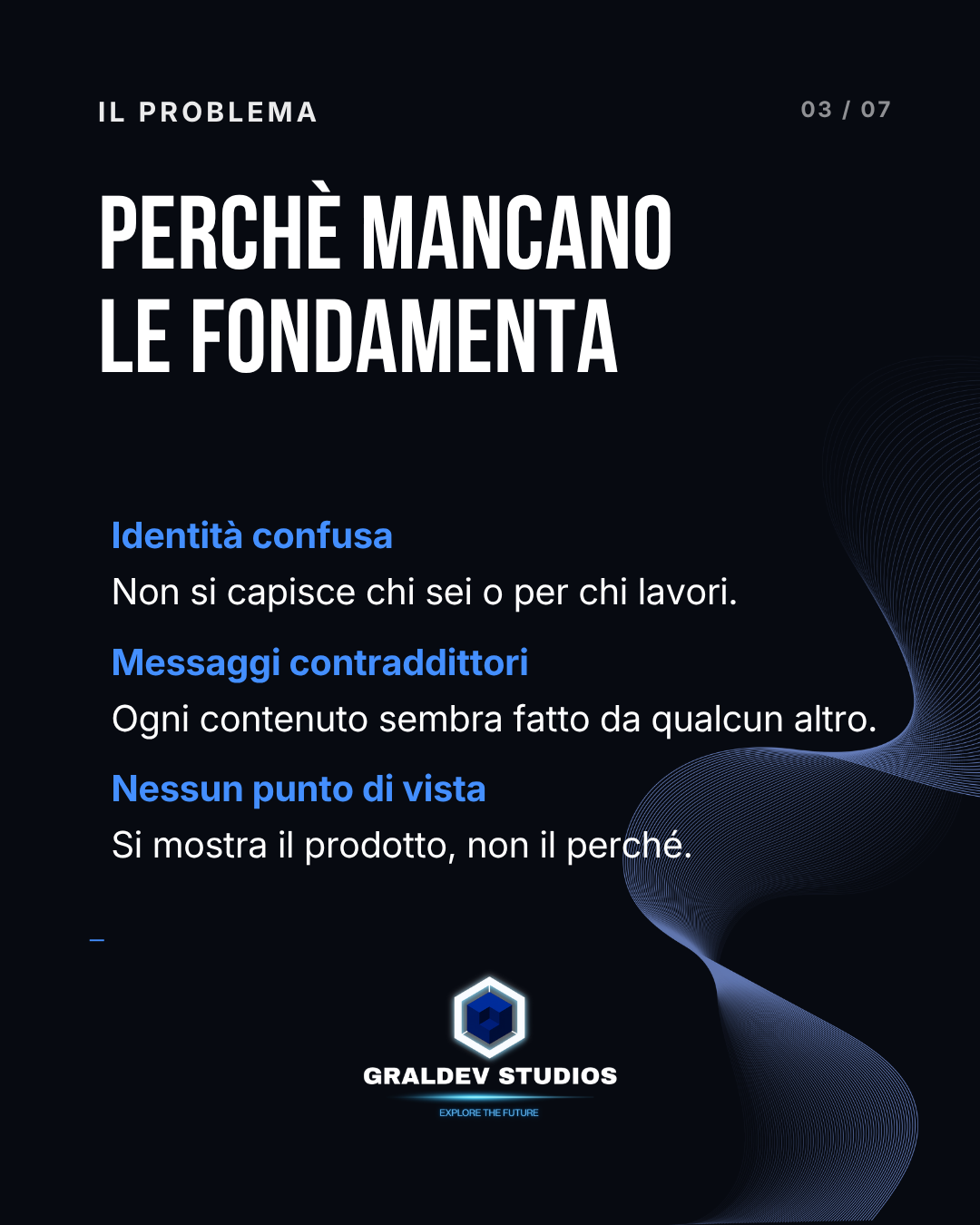
The first mistake: an identity that constantly changes
Colors, framing, tone of voice, and narrative style are not decorative details. They are the elements through which a brand becomes recognizable.
If every piece of content looks as though it belongs to a different company, audiences must start from scratch every time. Familiarity never develops, personality never becomes established, and visual memory remains weak.
Credibility begins when people recognize your voice before they even read your name.
The second mistake: images and words tell different stories
Elegant communication paired with impersonal copy creates friction. In the same way, an emotional message supported by cold and anonymous imagery immediately loses intensity.
Credibility depends on making every layer of communication move in the same direction. Visuals should not merely decorate the text: they should confirm it, amplify it, and make it easier to remember.
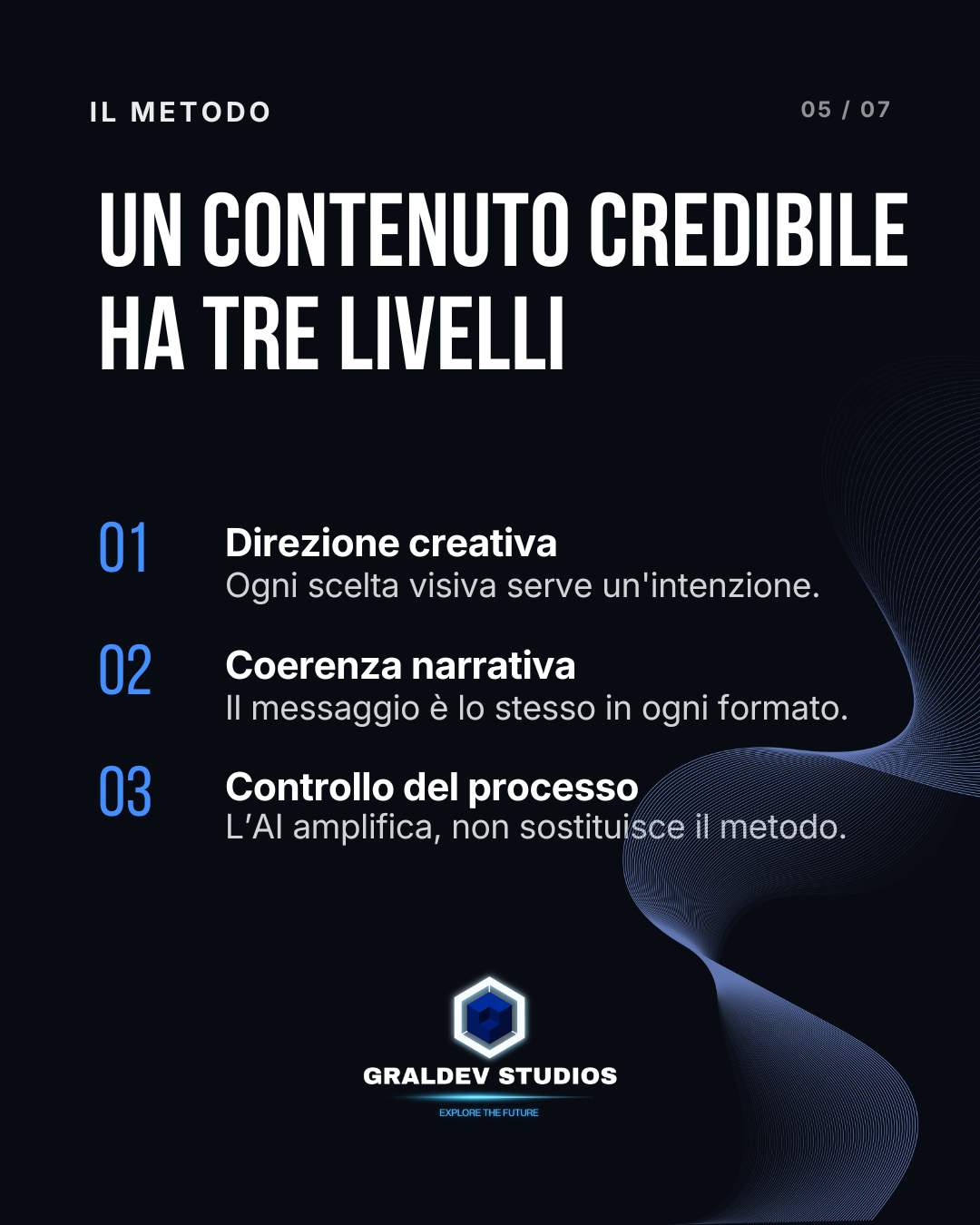
The third mistake: having no point of view
Many pieces of content are correct, polished, and technically accomplished, yet they could belong to any company. They take no position, express no recognizable sensitivity, and leave no precise impression.
A credible brand does not simply try to look competent. It shows how it sees the world, which details it considers important, and what kind of experience it wants to create for its audience.
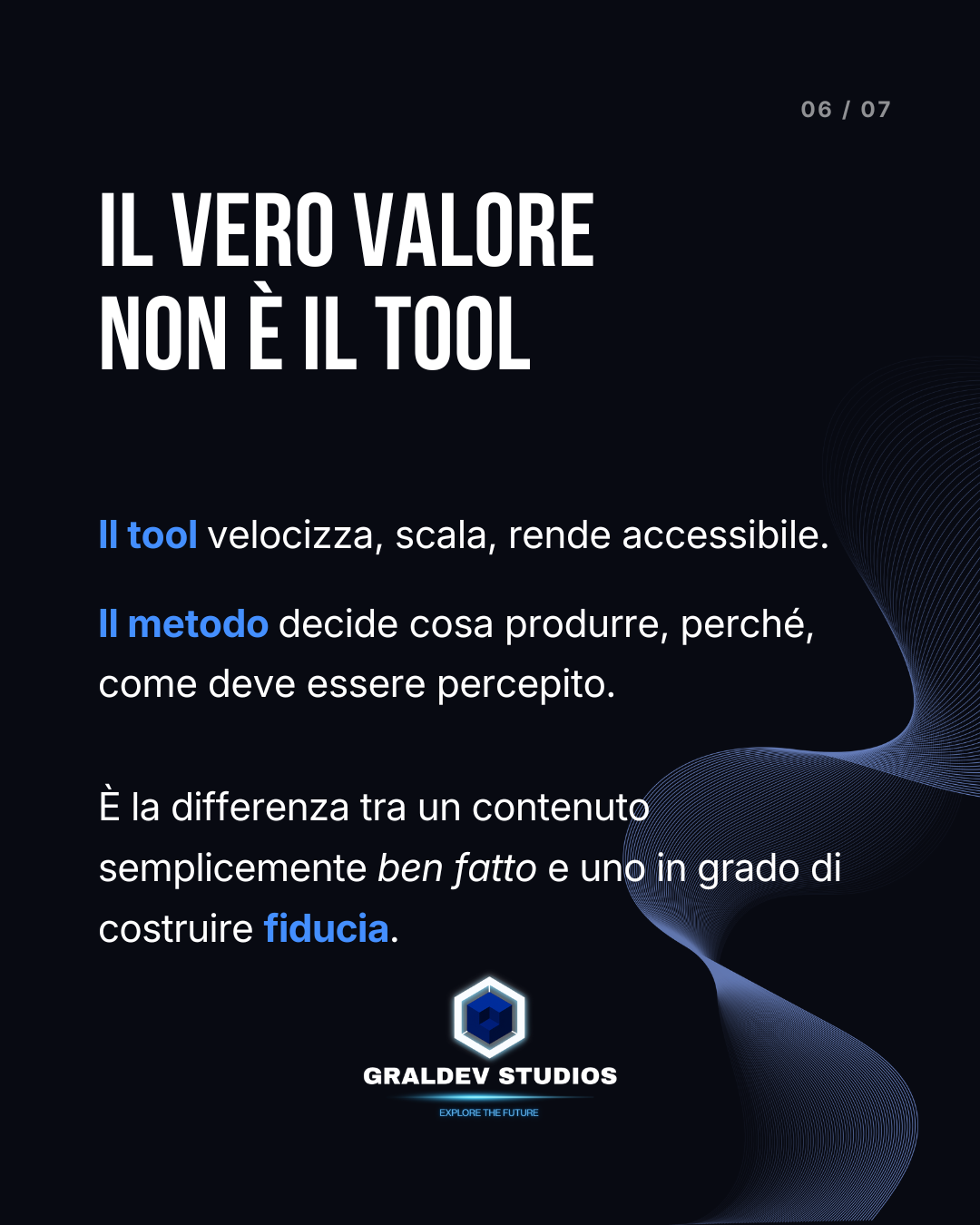
From generation to creative control
Artificial intelligence can generate striking images, but it cannot independently decide which identity should emerge, which emotion should remain, or which message should guide the experience.
A professional process therefore goes beyond generation. It requires creative direction capable of selecting, correcting, and harmonizing every decision.
- Strategy: define what the content must communicate and to whom.
- Identity: establish recognizable visual and narrative codes.
- Consistency: align imagery, words, rhythm, and sound.
- Control: ensure that every scene strengthens the central message.
True quality means being recognizable
Credible content does not need to repeatedly explain who the brand is. It communicates identity through every choice. The palette, camera movement, product presentation, and even pauses become part of the same voice.
This consistency transforms a sequence of beautiful images into communication capable of generating trust, value, and memory.
Technology can make content spectacular. Creative direction makes it authentic.
At Graldev Studios, we design AI-driven content starting from the brand identity, not the tool. Because the real goal is not simply to capture attention, but to build a visual presence that audiences can recognize and remember.
Want to tell your brand story?
Discover how we produce cinematic AI-driven videos and immersive experiences without physical production sets.